In Defense of Drinking Alone

12 Aug

We’ve all done it.  There are those evenings after a bad day at work or school or whatever where the only thing that will get us through the evening is a drink.  Alone.

There is such a stigma attached to drinking alone, for a variety of reasons.  For one, drinking alone implies that you have no one else to drink with, i.e. you are a loser.  Or, drinking alone implies that you have a drinking problem, i.e. you are an alcoholic:

But drinking alone is not in of itself a bad thing.  It is a useful tool, one of the great friends of mankind.  There are times when you need to take the edge off of life, or times when you just want to forget about everything and just get to the next morning as quickly as possible.  Obviously, indulging in individual imbibment on a regular basis may be indicative of deeper problems, but then again, merely drinking with other people doesn’t mean you don’t have a problem, either.

Continue reading

What Have I Become, My Sweetest Friend?

10 Aug

One of the good things about Wilmington is that being here forces me to read.  I don’t have regular access to internet here, I don’t have very many friends here (awww), and I don’t have a car.  All those mean that my joys here are eating lunch, working out, drinking (usually by myself–awww), and reading magazines that I purchase from the Amtrak newsstand.

One of the bad things about Wilmington is that I’m pretty much limited to purchasing my magazines at that newsstand, which is small.  Thus, I’ve already read this month’s Esquire, GQ, Atlantic, Men’s Health, and Details magazines.  Unless I want to delve into, say, Cosmopolitan or People, I’ve pretty much gone through all my options.

Merits of Wilmington aside, Details had an interesting spread on the artisanal movement and how ubiquitous it’s become.  As stated by the author:

What’s new is the astonishing ubiquity of the aesthetic. Small-scale has hit it big. Farmer’s markets sell artisanal cheeses— and so does Costco. Suits available in midwestern malls have machine-made details that mimic the hand stitching once found only on a Neapolitan tailor’s eccentrically rolled lapel.

Now, I don’t think there’s anything wrong per se with this newfound appreciation for craftsmanship.  Indeed, I think it’s great that we can purchase exceptional items made by small producers.  I recognize, however, that just as with “biodynamic” and “organic”, “artisanal” can be co-opted by large corporations (or even by small producers who don’t necessarily use the best ingredients, components, or methods and are simply coattailing on the efforts of others) for their own benefit. 

Continue reading

Diapers Aren’t Just for Kids (or Adults) Anymore: The Wine Diaper

3 Aug

The skies aren’t as friendly as they used to be.

I remember one time when I was flying home to Los Angeles to Berkeley right after the Transportation Security Administration (TSA) instituted its rather draconian “3-1-1 Rule.”  This was sometime in 2006, and I was still in college.  I was trying to bring a nice bottle of wine with me to share with the family, but when I got to the ticket counter the woman working the counter informed me that my bottle would be a problem.

Basically, the 3-1-1 Rule provides that you may not carry onto an airplane any container of liquid or gel with more than three ounces of whatever in it.  It doesn’t matter if it’s a twenty-ounce bottle of soda with only three ounces left; if it’s marked with a volume of anything greater than three ounces, it’s out.

The only way to save your beloved fluid from the trash is to check it (this option wasn’t available to this poor man).  But that is a rather risky proposition.  I am loathe to transport glass bottles of highly staining liquid in a suitcase with my clothes and other knick-knacks, especially if said suitcase is going through the travails of baggage handling.

Continue reading

A Goodbye and a Bottle of Wine

2 Aug

For some people wine is just fermented grape juice, no more exciting or magical than a bottle of soda.  It is much more than that, however.  It is the proper accompaniment for any number of occasions: celebrations, milestones, and, as in yesterday, goodbyes.

Rebecca left this morning for her three-week cross-country journey through which she will be exploring America and relocating to Alaska, where she’ll be clerking at the state intermediate appellate court.  We spent yesterday in Philadelphia, stopping first at Metropolitan Bakery for pastries (she had a chocolate croissant and I had a slice of a delicious prune log) at Rittenhouse Square.  We grabbed a quick bite at Tria wine bar (we shared poached black Mission figs with gorgonzola and prosciutto di parma, and an absolutely wonderful cold duck salad with spinach, strawberries, and pistachios in a citrus-mint vinaigrette), browsed perhaps the best Italian market ever, and ended the evening in Philly at Marathon on the Square where we had amazing fried calamari and she had shrimp and crab pasta and I had a beef brisket quesadilla.  (We also took a detour to Anthropologie and then to Fishtown, which was not well-advised.)

Continue reading

Power to the People! The DC Wine Buyers Collective

26 Jul

You’ve been to a Costco, right?

If you’ve ever been to a Costco and purchased two industrial-sized jugs of mayonnaise, or a hundred pack of tacquitos, or ten pounds of boneless chicken breast, you’ve experienced first-hand the advantage of buying in bulk. It is a truism that you will save money by buying bulk quantities of nearly anything.

Just as it’s true for condiments and delicious Mexican finger foods, it’s true for wine.

Nearly every wine retailer offers case discounts. For instance, if you were to purchase one bottle of wine, that bottle could cost $50. If, however, you were to buy a case of that same wine, most retailers would give you a 10-15% discount off the whole case. At a 10% discount a case of wine would be $540 (versus $600), or $45 per bottle. Unfortunately, most people don’t have $540 to drop on a case of wine, even if it is a discounted rate. Even if they did, most of those people wouldn’t be able to get through twelve bottles, or would not have the proper storage facilities.

Hence, the power of a wine collective.

Continue reading

The Perfect Wine for Summer

21 Jul

If you read my blog you probably are aware of the concept of carbonic maceration.  I won’t go into the technical details of it because I want to focus on one aspect of this process–namely, that some of the grapes at the bottom of the vat are crushed under the weight of all the other grapes and juice on top on them.

I feel that way about this blog.

The reason I feel this way about my blog is not because I don’t enjoy writing on my blog–nothing could be farther from the truth.  The fact is, however, that I undertook to write a number of blog posts–reviews of wine I received, reviews of books I received, reviews of wine paraphernalia I received–at the close of the spring semester and haven’t yet gotten around to writing them.  If you’re one of those fine, generous people who gave me things to review: I apologize sincerely!  I will write and post my reviews very soon.

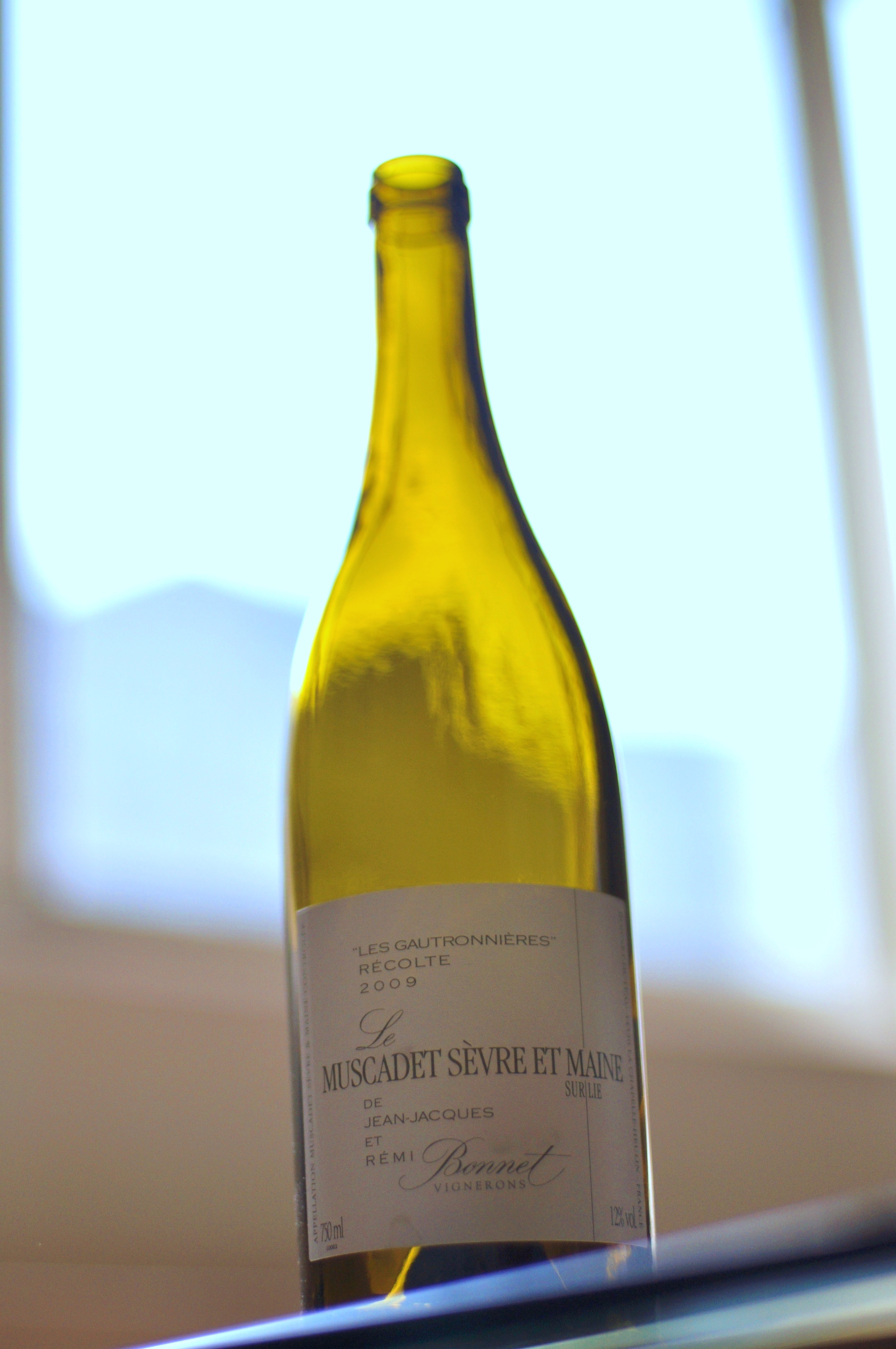
Whew!  With that out of the way I feel as if my soul can now be made into delicious, fruity (yet serious and profound) Beaujolais cru.  I have been drinking a fair amount of wine during this second half of summer, what with my being in Wilmington, Delaware during the weekdays and DC during the weekends and all.  I’ve had some fantastic aged Rully and some great Pinots.  However, I want to devote this Phoenix of a post to a simple, inexpensive, but altogether ravishing white wine: the 2009 Bonnet-Huteau Muscadet Sèvre et Maine “Les Gautronnieres” ($11.99, available at Ansonia Wines and Weygandt Wines, both in DC).

(Thanks to the fabulous Rebecca for this picture, taken with her brand-new Nikon D90!)

Continue reading

Now There’s a Reason for Me to Head Out to Clarendon: Northside Social

13 May

One of the things I loved most about Berkeley as a student was the café culture.  There were literally three dozen cafés I could go to in Berkeley and Oakland, and I could go to any number of these shops to fit a particular mood.  The standard was Caffe Strada, which being on the corner of College and Bancroft was the most convenient place to get caffeinated in the morning or between classes.

For a $10 meal of iced coffee and a fresh-baked pizza I would go south on College to Espresso Roma.  Further down College Ave. was the great Cole Coffee with its poached eggs, toast, and jam, and way down College, near where College became Broadway, was Hudson Bay Cafe, which with its triangular nook and plate glass windows always seemed to me to be the edge of the world.  Of course, there were a number of other cafes not on College (Free Speech Movement Cafe, owned by the same man as Caffe Strada; the International House Cafe; Nefeli; Au Coquelet; the original Peet’s Coffee on Vine Street).  It’s something I miss in DC, where the only options for me are Peregrine Espresso, Big Bear (which is inconvenient as heck), SoHo (where I was once caught in the crossfire of a transvestite-lesbian catfight), Bourbon, and, thankfully, the excellent and recently-opened Filter Coffeehouse.

Continue reading

South Pasadena, je t’aime!

11 May

After an unconscionably long hiatus (I blame finals and other end-of-the-year miseries) I am back!  “Back” applies in two ways: first, I am back to posting this blog, where I intend to write posts weekly over these 14 weeks of summer, and second, I am back in California.

I will be in California for five more weeks, after which I will be headed back to DC for a few days, and then eight weeks in beautiful Wilmington, Delaware, known in legal circles as one of the locations of the Court of Chancery (where I’ll be interning) and known in pop culture circles as the nameless setting of Fight Club.  Hopefully during this time there will be wine, wine, and more wine.  If this past week has been any indication, there will be plenty of that this summer!

I have to write a few posts, one of Deep Sea Wines (which was gracious enough to send me two bottles to review), another for a great product known as the Wine Diaper (it’s probably not what you think it is), and yet another for a book by Matthew Frank entitled Barolo.  And, I’ll have to write about a very wonderful evening at Founding Farmers in DC at which a bottle of Riesling figured prominently–that’ll be coming soon.  All of these will take place in good time, but before I do I wanted to “clear the palate,” so to speak, by writing about a few of the wines I’ve had at home.

One of my habits while at home is to buy a few bottles with which to tide over my mom until my next visit.  I had purchased a few bottles during Spring Break, and to my surprise (and pleasure) I found that one of the bottles had not yet been opened.
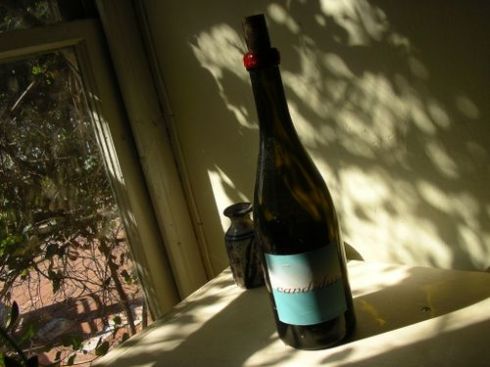
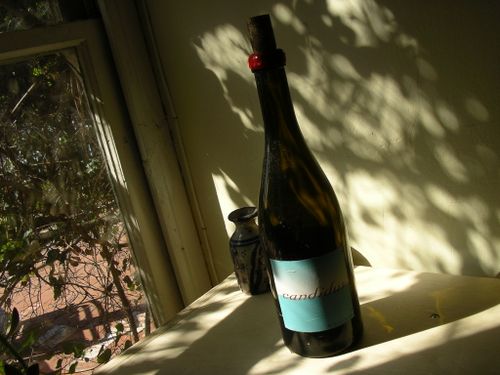
This bottle was the Candidus from Malm Cellars.  Malm Cellars is a one-person show, helmed by Brendan Malm.  He doesn’t have a winery or vineyard, but he sources fruit from select growers to make his wines.  One such wine, his 2007 Sonoma County Pinot Noir, garnered a great review from the LA Times.  The Candidus, which is made from a bunch of undisclosed white Rhône varietals (but also apparently includes Chardonnay concentrate according to Dave from Mission Wines), is about $16.  It’s intensely aromatic–I’m thinking Viognier or Muscat (though I’m not sure if Muscat is a Rhône varietal)–with an assertive nose of quince and honey.  It’s pear-colored and appears on the viscous side.  Excellent: full of dried apricot and citrus, full bodied yet light, good acidity, very pleasant.

Continue reading

A New Bunch: DC Wine Appreciation Society

13 Apr

It’s an idea whose time had come.

I had always wanted to be part of a wine club, one whose members were genuinely interested in wine and learning about wine, and one whose members would not be adverse to chipping in for very nice bottles.  But for one reason or another the club did not materialize.

If you’re reading this blog there’s probably about a 10% chance you’re a law student.  If so, you’ve no doubt taken torts.  Torts–which can loosely be defined as civil actions to recover damages for injuries to person or property–can be divided into two broad categories: intentional torts and unintentional torts.  Unintentional torts encompass negligence, the five elements of which are:

  • Duty
  • Breach of duty
  • But-for (factual) cause
  • Proximate (legal) cause
  • Damages

The proximate cause can be defined as that which gave rise to the injury.  For instance, if I accidentally push someone through a window, then the proximate cause of the resultant injury is my push.

But-for causation, however, is an interesting concept because it recognizes that every outcome is the result of many different causes.  For instance, in the above scenario there are multiple but-for causes, such as the victim’s sitting on the window, my being on the second floor, the host throwing a party, etc., all the way to very distant events such as my being born, my parents meeting, ancient tribes settling in what is present-day Korea, and so on.  The analysis for but-for causation becomes: “but for X’s action, would Y have suffered injury?”

Continue reading

New Article in the Palate Press!

5 Apr

Check out my newest article in the Palate Press!  It’s about my five days managing Ansonia Wines, which is a newish small boutique wine shop in the North Dupont neighborhood of DC.

http://palatepress.com/2010/04/from-connoisseur-to-entrepreneur-five-days-as-a-wine-store-manager/